
________________________
It's hard not to notice instances where niche fragrances and brands are presented in ways that seem unfortunate, whether it's with a discount, on the bottom shelf alongside much less exclusive products, or perhaps in what feels like the entirely wrong store.
In-group 🤜🤛 Out-group:
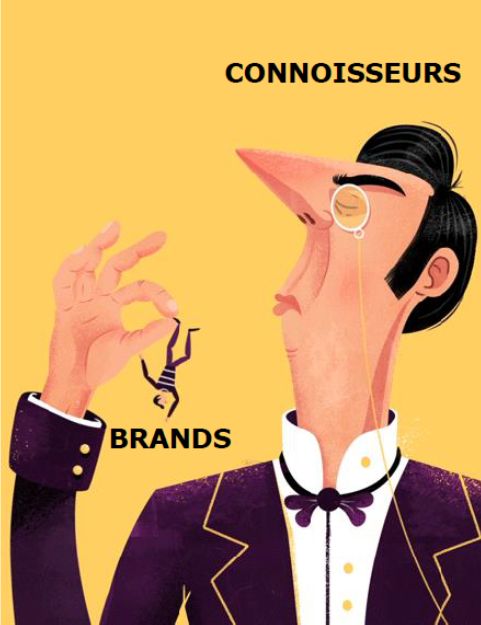
For luxury and niche brands, a distinction is made between in-group(owners) and out-group(dreamers) dynamics. When owning a luxury product, it's not just about the item itself, but its value becoming part one's self-worth and the perception of others.
I've encountered in several interviews that owners of exclusive perfumes gatekeep them to maintain their exclusivity, only revealing them to those they deem "worthy".
To whom a luxury brands chooses to be a dream and a reality for matters. Therefore, owners look askance at initiatives that invite the wrong clientele(out-group) through downward extensions, price reductions(see Tesla), or being sold in seemingly "off" locations, alongside products unworthy of comparison, which reflects poorly on the owners, and the brand perception.
Hence, the store, the shelf, and the neighboring products become a large part of the perceived value of the brand.
👉 The state of affairs in Niche fragrance:
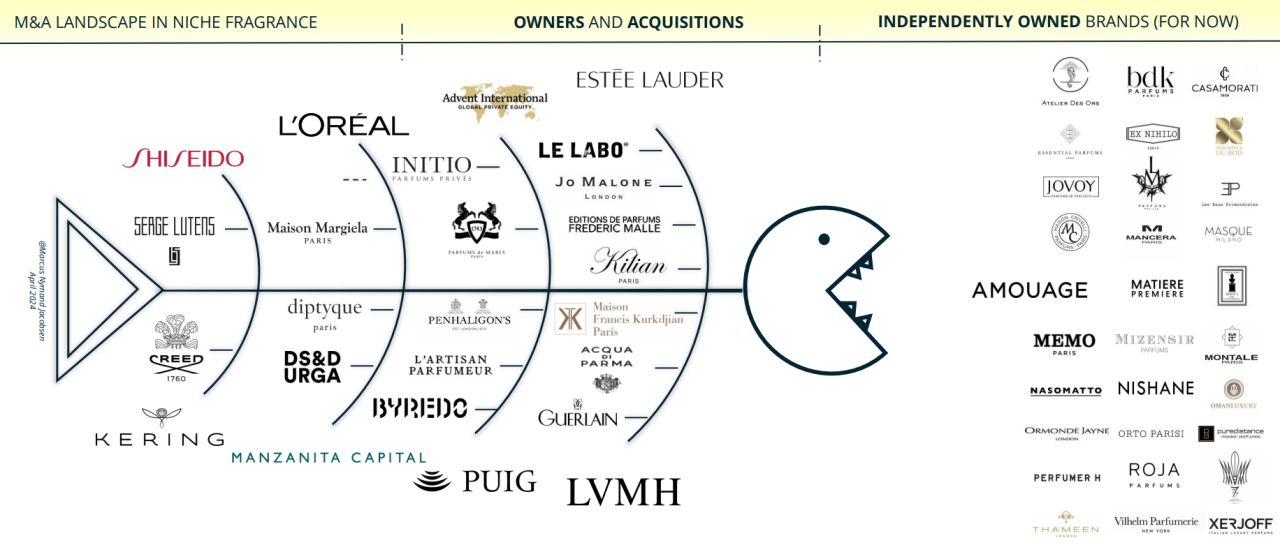
So far, the niche perfume category has typically been lumped together in department stores without much perceived differentiation between brands. However, as the category becomes more crowded with increased competition, the dividing lines between different types of brands have become clearer.
The most obvious one lies between the less selective(lower prices, more points of sale) and the more exclusive brands(higher prices, less POS). They typically won't share the same set of values either.These positions will typically attract two distinct types of clienteles: one influenced by youth culture and social media, with young individuals seeking accessible luxury, and the other, a more discerning clientele seeking a perfume beyond the ordinary.
🏡 Wrong neighborhood:
For the more accessible brands, sharing this space proves beneficial, whereas for the high-end ones, it's a disadvantage, only appearing expensive, but without the glammer of exclusivity. A high-end clientele avoids associations with younger demographics, creating conflict in stores where both high-end and accessible niche brands share the same shelves, potentially alienating a significant portion of the audience.
To cultivate high-end perfume brands and a more discerning clientele, one must consider this type of brand as its own category, giving them their own space, personalized and elevated from the rest.
You wouldn't build your dream home on a dull street, so why settle for anything less with your high-end niche fragrance brand?
________________________

"This is an article I published on LinkedIn that I later removed because I felt it gave away too much away."

Marcus Nymand Jacobsen, Managing Partner
________________________
It's hard not to notice instances where niche fragrances and brands are presented in ways that seem unfortunate, whether it's with a discount, on the bottom shelf alongside much less exclusive products, or perhaps in what feels like the entirely wrong store.
In-group 🤜🤛 Out-group:
For luxury and niche brands, a distinction is made between in-group(owners) and out-group(dreamers) dynamics. When owning a luxury product, it's not just about the item itself, but its value becoming part one's self-worth and the perception of others.
I've encountered in several interviews that owners of exclusive perfumes gatekeep them to maintain their exclusivity, only revealing them to those they deem "worthy".
To whom a luxury brands chooses to be a dream and a reality for matters. Therefore, owners look askance at initiatives that invite the wrong clientele(out-group) through downward extensions, price reductions(see Tesla), or being sold in seemingly "off" locations, alongside products unworthy of comparison, which reflects poorly on the owners, and the brand perception.
Hence, the store, the shelf, and the neighboring products become a large part of the perceived value of the brand.
👉 The state of affairs in Niche fragrance:
So far, the niche perfume category has typically been lumped together in department stores without much perceived differentiation between brands. However, as the category becomes more crowded with increased competition, the dividing lines between different types of brands have become clearer.
The most obvious one lies between the less selective(lower prices, more points of sale) and the more exclusive brands(higher prices, less POS). They typically won't share the same set of values either.These positions will typically attract two distinct types of clienteles: one influenced by youth culture and social media, with young individuals seeking accessible luxury, and the other, a more discerning clientele seeking a perfume beyond the ordinary.
🏡 Wrong neighborhood:
For the more accessible brands, sharing this space proves beneficial, whereas for the high-end ones, it's a disadvantage, only appearing expensive, but without the glammer of exclusivity. A high-end clientele avoids associations with younger demographics, creating conflict in stores where both high-end and accessible niche brands share the same shelves, potentially alienating a significant portion of the audience.
To cultivate high-end perfume brands and a more discerning clientele, one must consider this type of brand as its own category, giving them their own space, personalized and elevated from the rest.
You wouldn't build your dream home on a dull street, so why settle for anything less with your high-end niche fragrance brand?
________________________
"This is an article I published on LinkedIn that I later removed because I felt it gave away too much away."
Marcus Nymand Jacobsen, Managing Partner